Engaging training for the mind and focus
Logic and thinking games are wonderful tools for stimulating your children's intelligence and patience. The famous magic cube (moka3ab siri) stands out as the ultimate brain teaser, spanning generations without ever losing its fantastic appeal. By manipulating these colorful blocks to try and align the faces perfectly, young minds develop their concentration, spatial awareness, and fine motor skills. It is a particularly calm and deeply rewarding activity that naturally keeps children away from screens, while offering them a captivating mental challenge that evolves at the pace of their learning.
In Morocco, whether to occupy long summer afternoons at home while staying cool, or to liven up car trips during family visits on the weekend, this small portable toy is an absolutely ideal travel companion. It slips easily into a backpack and can be taken out at any time for a stimulating and quiet play session. From the simplest versions to initiate beginners to very complex geometric models for little resolution prodigies, there is a wide variety of structures. Each family can thus find the brain teaser perfectly adapted to their child's level of dexterity, with options corresponding to different budgets in MAD, to enjoy a hobby that is robust, durable, and highly educational.
Available configurations and variants
To adapt to the thinking and motor skills of each young player, this great classic comes in several fascinating structures:
- 2x2 initiation cubes: Ideal for the little ones starting out, offering a faster resolution to immediately encourage self-confidence.
- Standard 3x3 models: The timeless classic, perfect for learning basic algorithms and practicing spatial memory intensely.
- Complex 4x4 versions and above: For older children seeking a higher level of difficulty and a true challenge for improvement.
- Pyramid-shaped puzzles: An original geometry that changes from the ordinary and requires a brand-new approach to manipulation.
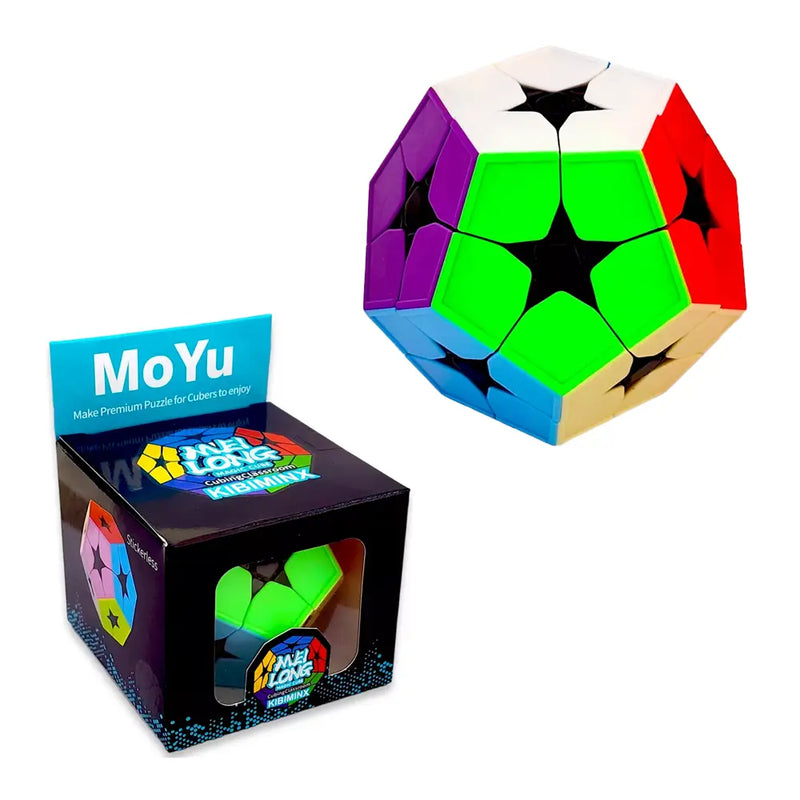
- 12-sided dodecahedron models: Designed for experts and fans of speedcubing who want to test their limits with a multitude of combinations.
- Interactive early-learning cubes: Sound and colorful toys that revisit the concept to introduce toddlers to the notions of shapes and animals.
Practical tips for use and progress
To ensure the gaming experience remains a pleasure and to preserve the mechanical quality of your thinking equipment, here are some useful recommendations:
- Progressive learning: Always start with a very simple model before moving on to denser formats to avoid discouraging the child with difficulty.
- Valuing effort: Celebrate every small victory, such as completing a single colored face, to keep your little one's motivation intact.
- Smooth movement: Teach your child to turn the rows gently, without forcing the central axes, to avoid the risk of breaking the rotation mechanism.
- Protective storage: Store these toys away from sand and dust, particularly after an outdoor trip, to prevent the internal gears from getting clogged.
Frequently Asked Questions
How to choose the right puzzle according to my child's age?
For toddlers, opt for interactive early-learning cubes or small, very manageable 2x2 formats. From 6 years old, a classic 6-sided model is ideal for starting out. Pyramids or 12-sided structures are reserved for children who already have an excellent mastery of the basics.
What are the benefits of a magic cube for development?
This toy is an exceptional tool for building perseverance. It significantly improves eye-hand coordination, 3D perception, logical analysis skills, and memory, while offering a very effective educational alternative to digital entertainment.
How to maintain the mechanisms so they stay smooth and fast?
Absolutely avoid exposing the toy to beach sand or water. If the rotations become stiff over time, you can wipe the gaps with a small dry cloth. Some technical models can even be treated with a tiny drop of specific lubricant.
Is it a good game to keep children busy during holidays in Morocco?
Absolutely, it is the ultimate portable activity. Completely silent, lightweight, and requiring no batteries or connection, it allows for intelligently occupying children during long car journeys, in waiting rooms, or during the hottest hours in the shade.
What to do if my child gets frustrated by not being able to solve it?
Frustration is a normal part of this learning process. Encourage them to proceed in small steps, aiming first to form a simple cross, then a single color. You can also look at child-friendly tutorials together to unblock the situation in a good mood.
Is there a method or tip for solving a Rubik’s Cube?
Yes, there are several methods for solving a Rubik's Cube. The most popular for beginners is the Layer by Layer method. This technique consists of solving the cube step by step, starting with a full face and then progressing to the following layers.
The method generally takes place in 6 steps:
- Form a cross on the first face (often the white face).
- Complete the corners to finish the first layer.
- Place the edges of the second layer.
- Form a cross on the last face (often yellow).
- Correctly position the corners of the last face.
- Orient the corners and edges to finalize the cube.
An important tip is to remember that the centers of the cube never move: they determine the color of each face. With a little practice and some simple algorithms, most beginners can learn to solve a Rubik’s Cube in just a few minutes.
Most searched keywords
Parents looking for stimulating thinking games for their children regularly perform these searches:
- Rubik's cube Morocco
- Magic cube price child
- Cheap logic puzzle
- Best speed cube
- 3D educational puzzle comparison
- Buy 12-sided cube Casablanca
- Mind and concentration toy
- Quick rotation pyramid cube
- Beginner child puzzle
- Spatial learning toy
Related searches and lexical variants
To support the curiosity of their little geniuses and help them progress, families also explore these complementary themes:
- How to solve a magic cube easily
- Screen-free logic game reviews
- Gift idea for intelligent 6-year-old child
- Developing children's patience
- Improving fine motor skills and thinking
- Child puzzle algorithm tutorial
- Silent travel toy for car
- 3D puzzle rotation axis maintenance
- Benefits of educational math games
- Managing frustration during logic games
A permanent challenge to awaken young creative minds
Introducing a geometric thinking challenge into your child's daily life means giving them the key to autonomous learning, incredibly rich in perseverance and personal satisfaction. By opting for smooth mechanisms and structures precisely adapted to their level, you transform a simple leisure moment into a true intellectual and fun workout. Take the time to explore our careful selection to find the colorful puzzle that will get their brains working with immense pleasure, and do not hesitate to encourage them in the discovery of their very first winning combinations.

 Français
 English


 🔥Only 1 left
 Sold out
 Sold out
 Sold out39.00 MADUnit price /Unavailable
 Sold out


